
Interstellar Comet 3I/ATLAS: The Cosmic Visitor Rewriting Our Solar System’s Story
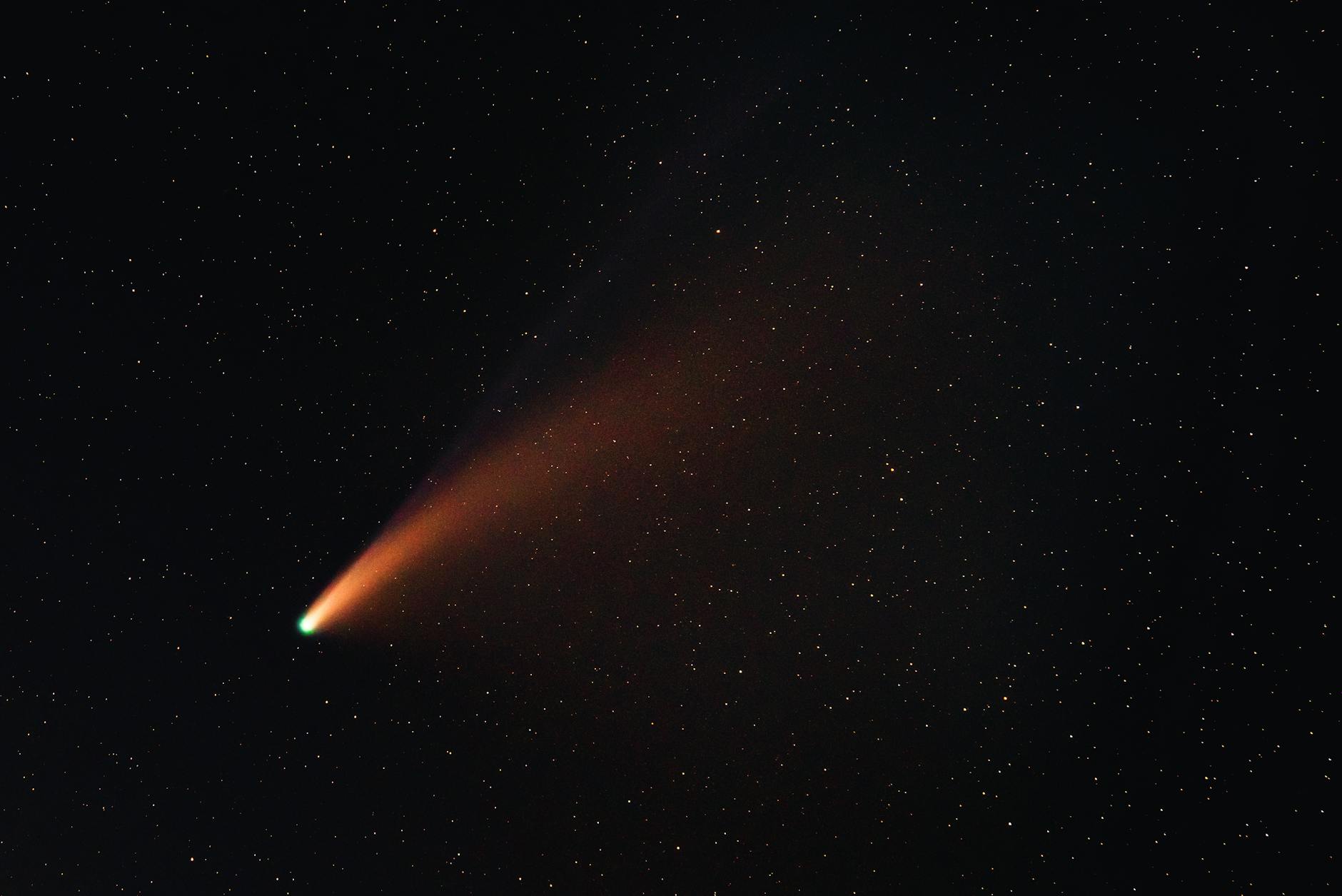
As we begin 2026, the skies are a little quieter, but the scientific community is still buzzing from a historic encounter. The interstellar comet 3I/ATLAS, a fleeting guest from another star system, has completed its dramatic swing through our solar system, leaving a trail of stunning images and profound questions in its wake. This icy wanderer, only the third such object ever confirmed, offered a once-in-a-lifetime opportunity to study the raw materials of a distant star, right in our cosmic backyard.
For Canadian stargazers and scientists alike, 3I/ATLAS was the astronomical event of 2025. While it never posed a threat to Earth, its journey past Mars and its closest approach to our planet in December provided a front-row seat to a truly alien spectacle. From confirming the presence of life’s building blocks to scanning for artificial signals, the investigation of this comet has blurred the lines between planetary science and the search for extraterrestrial intelligence.
What Is 3I/ATLAS? The Facts Behind the Visitor
Discovered on July 1, 2025, by the NASA-funded Asteroid Terrestrial-impact Last Alert System (ATLAS) telescope in Chile, 3I/ATLAS immediately stood out. Its name tells its story: it is the third (3) Interstellar (I) object detected, found by the ATLAS survey. Unlike the comets native to our solar system, which orbit the Sun, 3I/ATLAS is on a hyperbolic trajectory. This means it was moving far too quickly to be captured by the Sun’s gravity; it was merely passing through on a one-way ticket from the depths of interstellar space.
Key Characteristics and Milestones
The comet’s core is an icy nucleus surrounded by a glowing coma—a cloud of gas and dust that brightened as it neared the Sun. A fleet of NASA’s most powerful eyes, including the Hubble, James Webb, and SPHEREx space telescopes, tracked its every move, capturing unprecedented data.
| Event | Date (2025) | Details |
|---|---|---|
| Discovery | July 1 | By ATLAS survey telescope in Chile. |
| Closest Approach to Sun (Perihelion) | ~October 30 | At a distance of 1.4 AU (approx. 210 million km). |
| Mars Flyby | October 3 | Multiple spacecraft (like NASA orbiters) attempted observations. |
| Closest Approach to Earth | December 19 | Came within 167 million miles (approx. 269 million km). |
The Scientific Bonanza: What We Learned
The close study of 3I/ATLAS has yielded discoveries that are reshaping our understanding of chemistry across the galaxy.
Carrying the Seeds of Life
Spectroscopic analysis revealed that 3I/ATLAS was outgassing methanol and other complex organic molecules. These are considered key ingredients in the origin of life, suggesting that the fundamental chemistry for biology may be common around other stars. This finding supports the tantalizing idea that the building blocks for life are interstellar hitchhikers, distributed across star systems by objects just like 3I/ATLAS.
The Search for Signals: A Technological Probe?
The comet’s exotic nature sparked a fascinating, albeit speculative, line of inquiry: could it be artificial? Its hyperbolic path and unusual properties led some, like Harvard astronomer Avi Loeb, to openly discuss the possibility of a technological origin. In response, the Breakthrough Listen project aimed the massive Green Bank Telescope at the comet during its Earth close approach.
The results, published in a pre-print paper, were sobering but expected: no “candidate signals” of technological origin were detected. While this lowers the probability of 3I/ATLAS being an artifact, the very act of looking marks a new era in how we investigate interstellar objects.
How 3I/ATLAS Stacks Up: A Comparison of Interstellar Visitors
To understand the rarity and significance of 3I/ATLAS, it’s helpful to compare it to the only two other known interstellar objects.
| Object | Discovery Year | Type | Key Characteristics |
|---|---|---|---|
| 1I/’Oumuamua | 2017 | Asteroid-like | Elongated shape, showed non-gravitational acceleration, no visible coma. |
| 2I/Borisov | 2019 | Comet | Active comet with a familiar composition, first confirmed interstellar comet. |
| 3I/ATLAS | 2025 | Comet | Carried methanol/organics, subject of intense tech-origin speculation, observed by flagship NASA telescopes. |
A Legacy of Cosmic Mystery
As 3I/ATLAS now speeds away, never to return, its legacy is secure. It crowned 2025 as “The Year of the Comet” and demonstrated our growing capability to detect and study these interstellar interlopers. It has reinforced the need for a dedicated interceptor mission—a spacecraft ready to launch and rendezvous with the next visitor to perform up-close analysis, perhaps even landing on it.
For Canadians peering through telescopes last fall, it was a humble reminder that our solar system is not an island. We are part of a dynamic, interconnected galaxy where the raw materials of distant worlds occasionally sail past our door, carrying stories from stars we have yet to name.
Frequently Asked Questions
Was Comet 3I/ATLAS visible from Canada?
Yes, during its closest approach in late 2025, 3I/ATLAS was observable from Canada with binoculars or a small telescope under dark skies. However, it was never a bright naked-eye object like some famous comets. Its visibility peaked in December as it passed through the constellations of Gemini and Cancer.
Did 3I/ATLAS pose any danger to Earth?
Absolutely not. NASA has confirmed that while its trajectory brought it inside the orbit of Mars, it never came close to Earth. At its closest on December 19, 2025, it was over 167 million miles away—more than 600 times the distance to the Moon. It posed zero impact threat.
What does “hyperbolic trajectory” mean?
A hyperbolic trajectory is an open path, shaped like a curve that never closes. It indicates an object has a speed greater than the escape velocity of the Sun. Unlike the closed, elliptical orbits of planets and local comets, a hyperbolic path means 3I/ATLAS came from interstellar space, slingshotted around the Sun, and is now leaving our solar system forever.
Why is finding methanol on an interstellar comet so important?
Methanol (CH3OH) is a precursor to more complex organic molecules like amino acids and sugars, which are essential for life as we know it. Finding it on an object from another star system suggests that the basic chemical ingredients for life may be widespread throughout the Milky Way, potentially seeded on young planets by cometary impacts.